Featured
Table of Contents
AI tools can aid with this since LLMs or ad-hoc AIs can track plan updates. Here's how AI enhances Human resources processes: AI takes over recurring and time-consuming tasks, like return to evaluating.
It's vital to and develop where automation will have the most effect. If you're concentrated on enhancing recruitment, an AI system that can efficiently write task descriptions might be your ideal bet.
Among the most noteworthy advancements will be the. This innovation will allow HR groups to anticipate which prospect will certainly be the most effective for a job just by reading a resume. It will certainly also figure out future workforce needs, determine staff member retention dangers, and also recommend which workers might profit from added training.
Another area where AI is readied to make waves is in. With the expanding emphasis on psychological health and wellness and work-life equilibrium, AI-driven services are already being created to supply workers with personalized assistance. It's most likely that staff members won't wish to chat with digital wellness assistants powered by AI. They won't truly care for the real-time feedback a chatbot has for them.
Newsletter Alignment with Comprehensive Dent repair Approach
In terms of customization, generative AI could take them even additionally. And discussing that stress of tech, can become a game-changer in HR automation. This modern technology is expected to surpass basic chatbots and help HR groups produce individualized task summaries, automated efficiency reviews, and even individualized training programs.
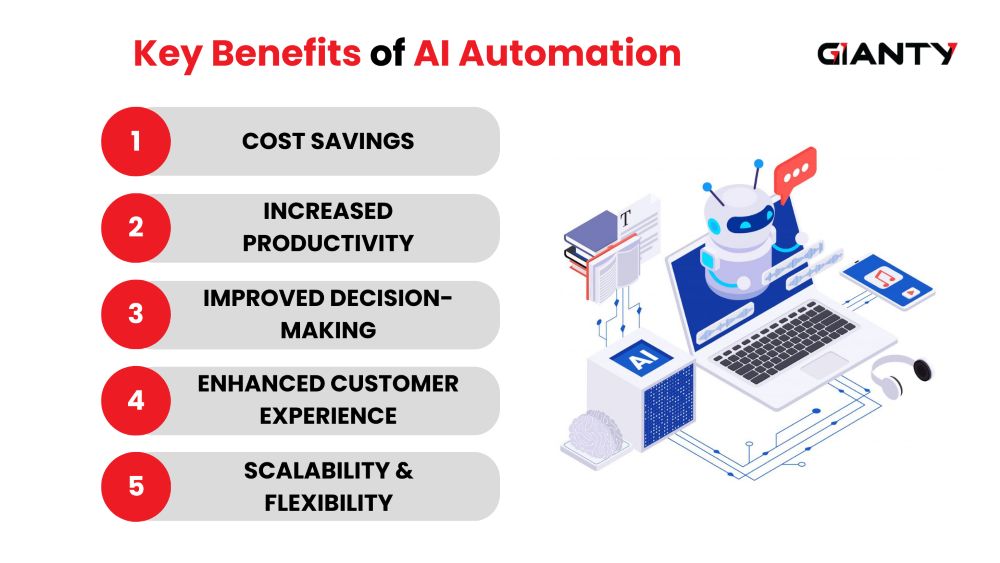
The genuine charm of generative AI is that it can make content and services that fit each distinct organization requirement. AI automation is rewording HR as it manages recurring and taxing jobs and enables human resources specialists to concentrate on tactical goals. AI devices provide quickness, precision, and expense financial savings. A boosted worker experience and reputable information for decision-making are also advantages of having AI connected right into a Human resources procedure.
The idea of "a device that thinks" dates back to ancient Greece. Since the introduction of digital computer (and family member to some of the topics reviewed in this short article) important events and milestones in the advancement of AI include the following: Alan Turing publishes Computer Equipment and Intelligence. In this paper, Turing renowned for damaging the German ENIGMA code throughout WWII and typically referred to as the "father of computer technology" asks the following inquiry: "Can equipments think?" From there, he provides a test, now famously called the "Turing Examination," where a human interrogator would certainly attempt to distinguish between a computer and human text reaction.
The Connection Between Patient Service and Dent repair
John McCarthy coins the term "man-made knowledge" at the first-ever AI conference at Dartmouth University. Later on that year, Allen Newell, J.C. Shaw and Herbert Simon create the Logic Theorist, the first-ever running AI computer program.
Neural networks, which utilize a backpropagation formula to train itself, became widely used in AI applications. Stuart Russell and Peter Norvig release Artificial Intelligence: A Modern Approach, which turns into one of the leading books in the research study of AI. In it, they explore four prospective goals or definitions of AI, which differentiates computer system systems based upon rationality and thinking versus acting.
Multi-Location Dent repair Management for [a:specialty] Practices
With these new generative AI practices, deep-learning designs can be pretrained on big amounts of data. Multimodal models that can take multiple types of data as input are offering richer, more robust experiences.
Below are the vital ones: Provides Scalability: AI automation changes conveniently as service needs expand. It uses cloud resources and artificial intelligence designs that expand ability without added manual labor. Offers Speed: AI designs (or tools) procedure info and respond instantaneously. This enables faster solution shipment and lowers hold-ups in procedures.
Sidestepping Expensive Dent repair Mistakes for Wellness Providers
Collect Data: Collect relevant information from reliable sources. The data might be incomplete or have extra details, however it forms the base for AI.Prepare Information: Clean the data by getting rid of errors and redundancies. Organize the information to fit the AI technique you plan to make use of. Select Formula: Choose the AI algorithm ideal suited for the problem.
This helps inspect if the AI design learns well and does accurately. Train Version: Train the AI design making use of the training data. Check it repetitively to enhance accuracy. Incorporate Version: Integrate the skilled AI design with the existing software program application. Test Design: Check the integrated AI version with a software program application to ensure AI automation works appropriately.
Medical care: AI is used to forecast diseases, take care of client records, and offer customized medical diagnoses. Manufacturing: AI forecasts equipment failures and takes care of high quality checks.
It helps projection need and established dynamic costs. Stores also use AI in storehouses to streamline supply handling. AI automation works best when you have the right devices developed to take care of certain tasks. There are numerous AI automation tools available; here are several of them: KaneAI: LambdaTest KaneAI is a generative AI automation testing agent that permits customers to produce, debug, and advance tests using natural language.
Synchronizing Dent repair with Practice Objectives for [a:specialty]
ChatGPT: It is an AI tool that assists with jobs like writing, coding, and addressing inquiries. ChatGPT is utilized for preparing emails, summing up message, producing concepts, or addressing coding issues.

Latest Posts
Building Your Digital Reputation for [a:specialty] Services
Nurture Approaches for [a:specialty] Digital Visitors
Privacy and Regulations in Mental Health Website Design